As an Amazon Associate, we earn from qualifying purchases. Some links may be affiliate links at no extra cost to you. Although our opinions are based on curated research, we haven't used these products. Articles generated with AI.


How Do I Choose The Right Brake Pads For My Car?

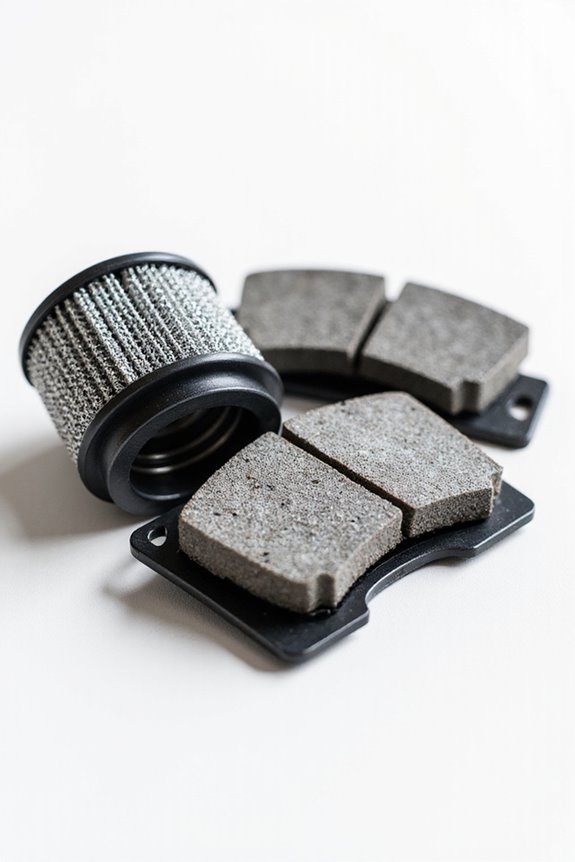
Choosing the right brake pads for our car can feel overwhelming, but it doesn’t have to be! Start by considering our driving style; for example, if we do a lot of stop-and-go driving, ceramic or semi-metallic pads might be best. We should also evaluate noise levels and dust production, opting for ceramic for a quieter ride. Finally, balancing cost with longevity is key—ceramics can last longer, making them a smart investment. Let’s explore more options to get that perfect fit for our brakes!
Key Takeaways
- Assess your driving style, considering factors such as frequency of stops, aggressiveness, and terrain type to select suitable pads.
- Choose brake pads based on performance needs; ceramic for quiet daily driving, semi-metallic for heavy use, and organic for cost-effectiveness.
- Evaluate heat dissipation capabilities; semi-metallic pads manage high temperatures better, while ceramics excel in everyday conditions.
- Consider noise levels and dust production; ceramic pads minimize noise and dust, while semi-metallics may produce more noise and wear down rotors.
- Factor in cost versus longevity, with organic pads lasting around 20,000 miles, semi-metallics up to 60,000, and ceramic pads potentially reaching 70,000 miles.
Understanding Different Types of Brake Pads
You may be interested

When it comes to selecting the right brake pads for our vehicles, knowing the differences can make all the difference in driving safety and comfort. Let’s break it down together.
- Ceramic Brake Pads: Cleaner and quieter, great for high-performance, but pricier.
- Semi-Metallic Brake Pads: Stronger stopping power, ideal for heavy use but noisier and more likely to wear down rotors.
- Non-Asbestos Organic (NAO) Brake Pads: Softer and quieter, perfect for everyday driving, though they wear faster.
- Low-Metallic NAO Brake Pads: A sweet spot for noise and performance, offering better heat transfer but can be louder.
Takeaway: Choosing the right brake pad material requires performance comparisons and understanding our driving needs. Consider factors like noise suppression features to enhance your driving experience. Choosing wisely guarantees a smoother ride and longer-lasting safety. Let’s make that choice together!
Assessing Your Driving Style
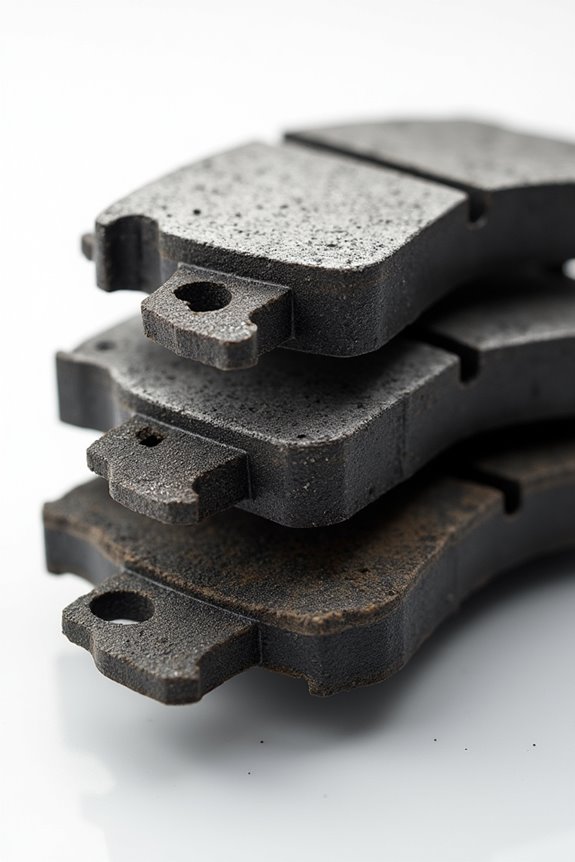
Evaluating our driving style is essential for selecting the right brake pads, and it can truly impact our vehicle’s overall performance. By understanding our driving patterns, we can better gauge our braking frequency. For instance, if we often find ourselves in stop-and-go traffic, we might need pads designed to handle frequent engagements.
Aggressive drivers, on the other hand, may require more durable options, as their hard stops create excess friction and heat. Venturing into hilly terrains? We should consider brake pads that can withstand prolonged braking. Additionally, looking for semi-metallic brake shoes can enhance stopping power in challenging conditions.
Takeaway: Embracing our unique driving styles helps us make smart choices, ensuring safety and efficiency on the road! Let’s not compromise our comfort or our vehicle’s longevity.
Evaluating Performance and Heat Handling
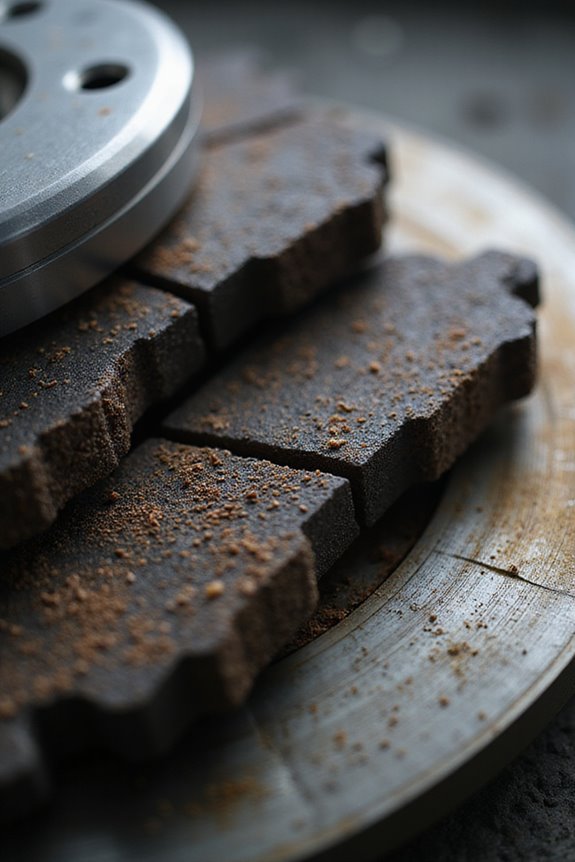
Understanding how brake pads perform under heat is essential, especially since the right choice can make or break our driving experience. When we think about performance, it’s all about heat dissipation and fade resistance. For spirited driving, semi-metallic pads shine due to their superior heat handling, keeping us safe and responsive. On the other hand, ceramics excel in everyday conditions but may falter during extreme heat.
Let’s remember organic pads—they may be comfy, but they’re prone to fading when the pressure’s on. Additionally, selecting pads in conjunction with compatible rotor designs can enhance the overall braking efficiency.
Takeaway: Choosing the right pads is all about our driving style—whether we’re cruising the streets or hitting the track, understanding how heat affects performance helps us stay in control. So, let’s pick wisely!
Considering Noise, Dust, and Rotor Wear
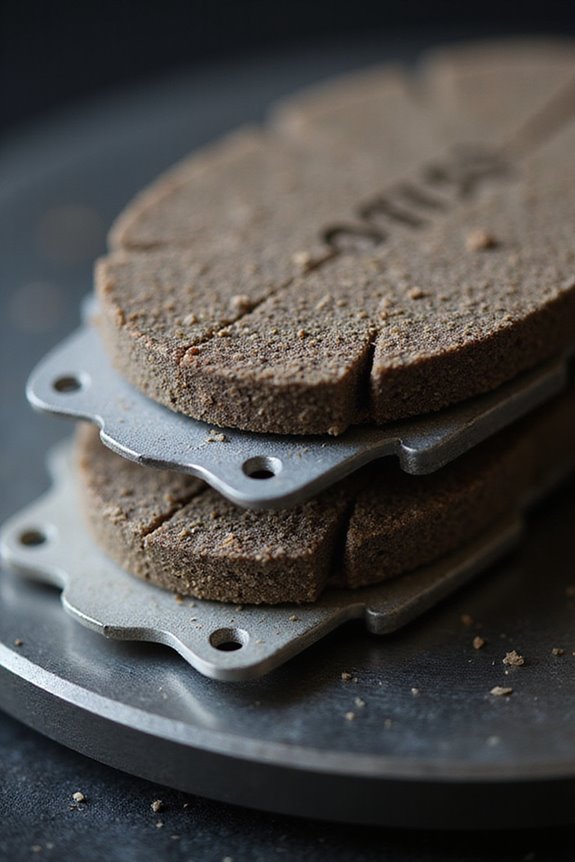
Choosing the right brake pads isn’t just about performance; it also involves considering noise, dust, and rotor wear, all of which can impact our driving experience. When we think about brake noise, ceramic pads are our best bet for quieter rides, producing minimal sound. On the other hand, semi-metallic pads can create those annoying metallic squeals we’d rather avoid.
Dust production matters too—ceramic pads generate the least brake dust, keeping our wheels cleaner, while semi-metallics can coat our wheels with abrasive particles. Furthermore, higher-quality pads, like those made with carbon-fiber ceramic materials, enhance braking performance while reducing wear on both pads and rotors.
So, if we’re after a balance between comfort and cleanliness, we might consider organic options for daily driving. They’re quiet and dust-friendly but can wear out faster.
Takeaway: Choose wisely based on your driving needs!
Balancing Cost and Longevity
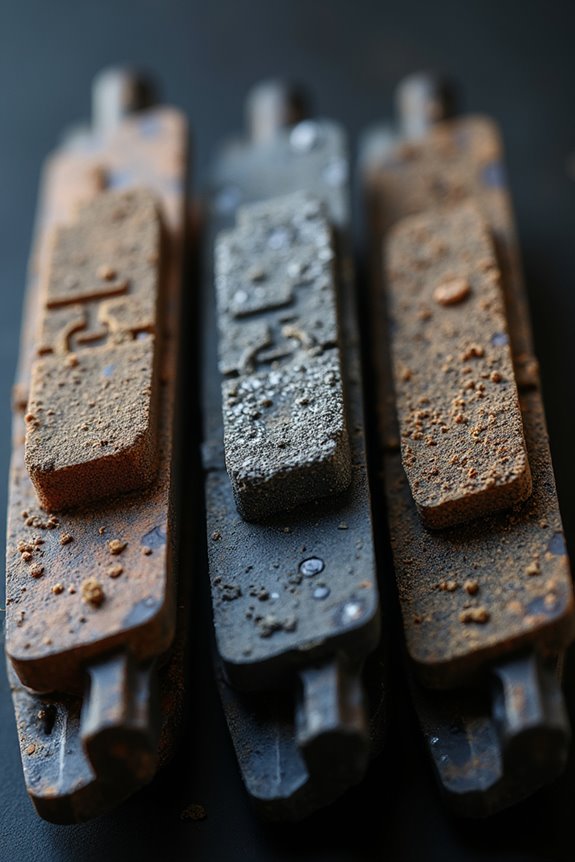
When considering brake pads, we can find ourselves wrestling with the age-old dilemma of cost versus longevity. Let’s face it; we all love a good deal, but cheap pad materials often lead to more frequent replacements, racking up long-term expenses. Organic pads are budget-friendly but may only last around 20,000 miles.
On the other hand, semi-metallic pads offer a nice balance, lasting between 30,000 and 60,000 miles, while ceramic pads can reach an impressive 70,000 miles. Investing initially in quality can save us in the long run, especially if we consider the rotors’ lifespan too. Choosing brake fluids with high boiling points can also enhance overall performance and safety.
Takeaway: Choose wisely, and think beyond the upfront cost for your sanity and savings!
Frequently Asked Questions
How Do I Know When to Replace My Brake Pads?
We can tell our brake pads need replacement when we hear noisy indicators like squealing or grinding. Watching for brake warning lights and monitoring performance are essential to keep our driving safe and smooth together.
Can I Mix Different Types of Brake Pads on My Car?
Sure, let’s mix and match brake pads for fun! But really, we shouldn’t; brake pad compatibility’s essential. Different materials can lead to chaos on the road. Trust us, uniformity brings peace and reliable stopping power.
Do Brake Pads Require Any Special Maintenance?
Yes, brake pads do require special maintenance. To guarantee longevity, we should regularly inspect them for wear and listen for performance issues; this way, we can keep our brakes functioning effectively and safely together.
How Can I Check the Thickness of My Brake Pads?
Ever wonder how safe our brakes are? To check brake pad thickness, let’s measure using tools like a micrometer or gauge; keeping an eye on wear indicators guarantees we’re driving safely together on the road.
Are There Brake Pads Designed Specifically for Electric Vehicles?
Yes, there are brake pads designed specifically for electric vehicles. These pads use unique materials that enhance performance and durability, ensuring electric vehicle compatibility while reducing environmental impact. We believe they’re essential for any EV owner’s peace of mind.