As an Amazon Associate, we earn from qualifying purchases. Some links may be affiliate links at no extra cost to you. Although our opinions are based on curated research, we haven't used these products. Articles generated with AI.


How Do I Select The Right Coolant For My Vehicle?

To select the right coolant for our vehicle, we should first check the owner’s manual. This will tell us the type—be it IAT, OAT, or HOAT—best suited for our engine. Next, we should consider the coolant’s color and chemical properties to guarantee compatibility. Remember, mixing different types can cause issues! Finally, sticking to maintenance schedules and observing any warning signs can help keep our vehicle running smoothly. Stick around; there’s more to explore on coolant care!
Key Takeaways
- Check your vehicle’s owner manual for specific coolant type recommendations and service intervals.
- Determine if your car requires IAT, OAT, or HOAT coolant based on its age and manufacturer specifications.
- Avoid mixing different coolant types to maintain optimal performance and prevent damage to the cooling system.
- Ensure you maintain a proper 50/50 antifreeze-to-water mix for effective heat transfer and freezing protection.
- Regularly inspect coolant levels and quality to identify any signs of leaks or deterioration early.
Understanding Different Types of Coolant
You may be interested


When we think about our vehicles, coolant often isn’t the first thing that springs to mind, right? However, understanding the different types of coolant can save us headaches down the road.
- IAT Characteristics: Traditional, green, suited for older cars but requires changes every 2-3 years.
- OAT Advantages: Long-lasting (up to 150,000 miles), free of silicates. Great for modern vehicles.
- HOAT Features: A blend of both, offers solid protection and is often used in European models.
Compatibility concerns? Absolutely. Mixing coolants can diminish performance and create issues. Additionally, consider maintenance recommendations that often advise changing brake fluid every two years to maintain system efficiency.
As coolant evolution continues, we must choose wisely, not only for our vehicles’ health but for the environment, too. Performance testing guarantees our choices align with our cars’ needs.
Takeaway: Always check manufacturer recommendations; your engine will thank you!
Key Chemical Properties of Coolants
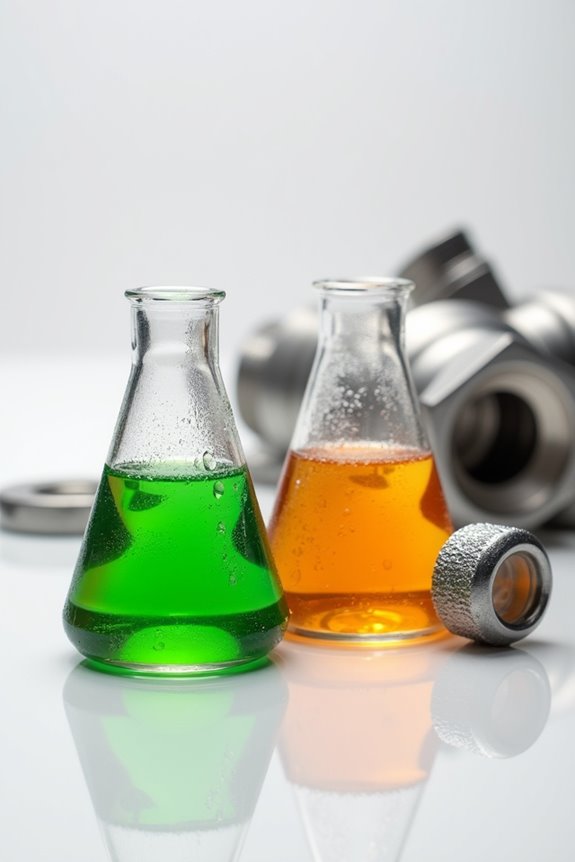
Understanding the key chemical properties of coolants is essential for keeping our engines running smoothly, and it can make all the difference when it comes to performance and longevity.
Coolants are primarily glycol-based liquids, with ethylene glycol being the main ingredient. This composition helps lower freezing points and enhance heat transfer, ensuring our engines don’t overheat or freeze. Proper chemical stability is maintained through corrosion inhibitors, protecting the engine from rust and degradation.
So, whether we choose ethylene or the less toxic propylene glycol, we’re ensuring our coolants do their job. Ultimately, paying attention to these properties, like the glycol-to-water ratio, can safeguard our engine’s health for years to come. Moreover, selecting high-quality fluids can significantly enhance transmission life and efficiency, ensuring all engine components operate at optimal levels.
Takeaway: Chemical stability and heat transfer properties are key in coolant selection!
Color Coding of Coolants and Their Significance

Color coding in coolant isn’t just a rainbow of hues that catches our eye; it actually serves a practical purpose in automotive maintenance. Understanding color significance helps us determine the chemical composition and the type of corrosion inhibitors used in coolants. For instance, green or blue typically represents Inorganic Additive Technology, while hues of orange, pink, or red indicate Organic Acid Technology.
However, we can’t rely solely on color for coolant compatibility. While it simplifies the selection process, referencing our vehicle manuals is key to ensuring we avoid mixing different types, which can lead to reduced protection and a shorter lifespan for our cooling systems. Let’s keep our engines happy by choosing wisely! Additionally, just like with catalytic converters, matching coolant types can ensure optimal performance and longevity of your vehicle’s engine.
Service Life and Maintenance Recommendations
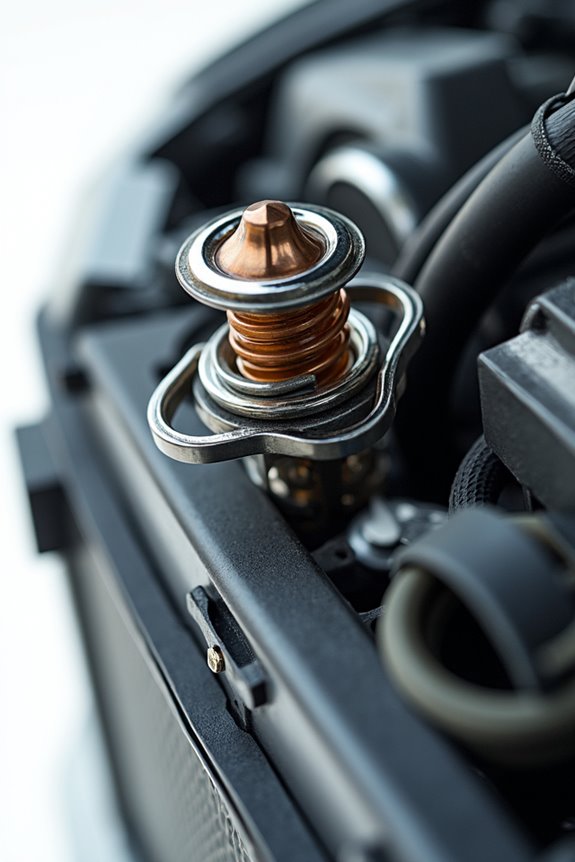
Choosing the right maintenance schedule for our vehicle’s coolant can feel overwhelming, but it’s essential for keeping our engines running smoothly. To promote coolant longevity, we should follow our manufacturer’s specific recommendations—often found in the owner’s manual. Traditional coolants may need changing every 30,000 miles or 2 years, while advanced OAT coolants can last up to 150,000 miles or 5 years.
Regular checks every 3,000 miles will help us catch any leaks or issues early on. And don’t forget the 50/50 antifreeze-to-water mix! Additionally, using high-quality materials in your vehicle’s components can enhance overall system performance and reliability.
Takeaway: Know your vehicle’s needs, stick to those maintenance timing guidelines, and we’ll keep our engines happy on the road. After all, a well-maintained coolant system is a key to reliability!
Importance of Cooling Performance and Protection
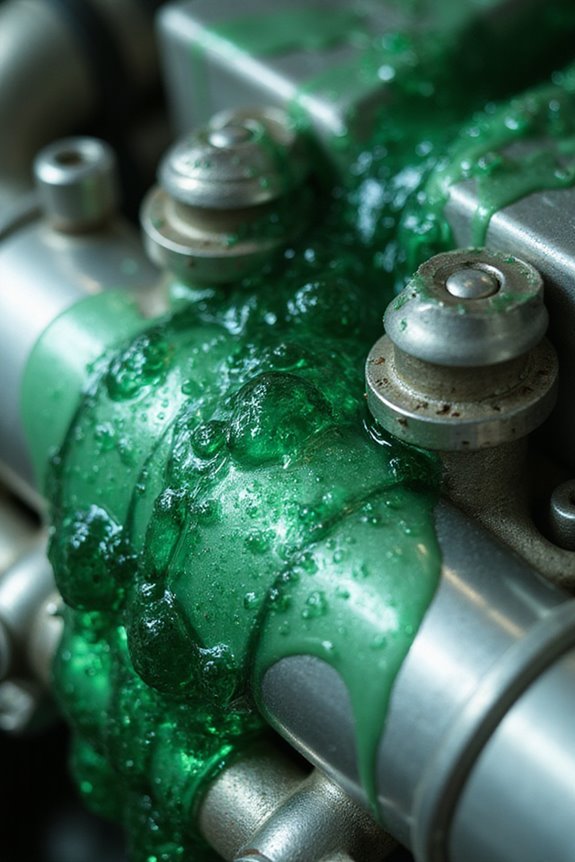
When we talk about coolant, it’s not just about keeping our engines from overheating; it’s about ensuring the entire system runs smoothly and efficiently. The right coolant enhances our vehicle’s thermal conductivity, which ultimately boosts coolant efficiency. When we choose a high-quality coolant, we’re not only reducing the risk of overheating but also protecting crucial engine components from corrosion and wear. Effective coolants resist contamination, maintain maximum freezing and boiling points, and keep our engines running at peak performance. Plus, a well-maintained cooling system can even improve fuel efficiency, making our drives a bit easier on the wallet. Furthermore, selecting the right OEM replacement for components, such as the AC condenser, can significantly affect overall vehicle performance.
Takeaway: Prioritizing cooling performance isn’t just smart; it’s essential for our vehicle’s longevity.
Guidelines for Selecting the Right Coolant
Selecting the right coolant can feel a bit overwhelming, especially with the array of options available. To help us out, here are some key coolant selection tips:
- Follow Manufacturer Guidelines: Always check your vehicle’s manual for specific coolant requirements including type and dilution ratios.
- Consider Vehicle Compatibility Factors: Factors like age and brand determine which coolant type to use—older vehicles often need IAT coolants, while newer models might require OAT or HOAT formulations.
- Pay Attention to Color and Composition: Remember, color alone isn’t a definitive guide; it’s the formulation that matters. Additionally, selecting the right coolant type based on vehicle age can help prevent potential engine issues.
Takeaway: Choosing the right coolant means more than just picking a color. Let’s stick to manufacturer recommendations to avoid corrosion or engine damage, shall we?
Compatibility Issues and Best Practices
Understanding compatibility issues is essential for any vehicle owner who wants to guarantee their cooling system runs smoothly, especially with the vast array of coolants available today. Mixing coolants, particularly those that differ in type or color, can lead to nasty surprises like gelling or harmful deposits. Trust us, no one wants a corroded engine!
To keep things safe, always stick to manufacturer specifications. We need to flush our cooling systems before introducing a new coolant type, just to be sure there’s no cross-contamination. And while color can be a guide, it’s the chemical formulation that matters most.
Takeaway: For ideal performance, let’s respect our vehicle’s needs—after all, a happy engine means a happier ride!
Monitoring and Maintaining Your Coolant System
Monitoring and maintaining our coolant system is essential for keeping our engines running efficiently. First, we should regularly check the coolant level—only when the engine’s cool, of course! We must guarantee it’s within the manufacturer-recommended range and look for any cracks in the reservoir.
We should also inspect for coolant leaks by examining hoses, the radiator, and checking for any puddles underneath our vehicle. Addressing these leaks promptly helps prevent engine overheating and serious damage.
Let’s not forget about the coolant’s condition; it should be clear and clean. If it’s discolored or smells funny, it may need a flush and replacement. Keeping an eye on these elements keeps our vehicle healthy and happily humming along!
Frequently Asked Questions
Can I Use Water Instead of Coolant in My Vehicle?
We wouldn’t recommend using water instead of coolant for our vehicles. While it might seem convenient, it compromises cooling efficiency and can lead to serious engine issues. Let’s prioritize the right coolant for our engines’ health.
What Are the Signs of Coolant Contamination?
We’ll notice signs of coolant contamination through rusty colors and sweet smells, indicating that issues arise from corrosion or leaks. Let’s stay vigilant for these clues to protect our engines and maintain performance together.
How Often Should I Check My Coolant Level?
We should check our coolant level at least twice a year. Following coolant maintenance tips, we can look for coolant level indicators like steam or rising temperature gauges to guarantee our engine stays healthy and happy.
What Happens if I Mix Coolants?
Mixing coolants is like playing with fire; it can lead to severe issues. We risk coolant compatibility nightmares and engine damage when combining different coolant types. Let’s keep our cooling systems safe and sound, shall we?
Can I Use Store-Brand Coolant Instead of OEM?
Yes, we can use store-brand coolant instead of OEM if it guarantees compatibility and meets our vehicle’s requirements. Often, store brands provide decent performance, but let’s double-check the specifications to be safe.