As an Amazon Associate, we earn from qualifying purchases. Some links may be affiliate links at no extra cost to you. Although our opinions are based on curated research, we haven't used these products. Articles generated with AI.


What Are The Different Types Of Car Tires And Their Uses?

When it comes to car tires, we have several options tailored for different driving conditions. All-season tires offer versatility for mild weather, while winter tires excel in snow and ice. For off-roading, we’ve got all-terrain and mud-terrain tires designed for rugged paths. Performance tires boost handling and grip in dry conditions, though they can wear quickly. Each tire type serves a unique purpose, so let’s explore how they can meet our driving needs better!
Key Takeaways
- All-Season Tires: Versatile for mild weather and light snow, suitable for daily commutes but lacks extreme winter traction.
- All-Terrain Tires: Ideal for mixed paved and off-road driving, with enhanced durability and winter capability marked by the Three-Peak Mountain Snowflake.
- Mud-Terrain Tires: Designed for tough off-road conditions, featuring large tread blocks for superior traction, but are noisy and less comfortable on pavement.
- Performance Tires: Focus on enhanced driving experience, providing excellent grip on dry surfaces and superior handling, but wear out faster and are not suitable for snow.
- Winter/Snow Tires: Made with flexible rubber for cold weather, offering superior traction on snow and ice, essential for safe winter driving.
All-Season Tires
You may be interested



When it comes to tires, all-season options are often the Jack-of-all-trades that we’ve come to rely on for everyday driving. They combine summer and winter tire tech to handle mild weather, allowing us to enjoy a smooth ride without the hassle of seasonal changes. With a rubber compound that adapts to varied temperatures, they do okay in light snow but aren’t suited for icy conditions.
Regular tire maintenance is essential; a balanced tread depth offers year-round performance and durability. They’re perfect for our daily commutes and city driving. However, we should acknowledge that these tires lack the extreme traction of dedicated winter options. Additionally, all-season tires feature all-season tread design that optimizes traction in both wet and dry conditions.
Takeaway: All-season tires are versatile but best for moderate climates—ideal if you value convenience and longevity over severe winter traction.
All-Terrain Tires
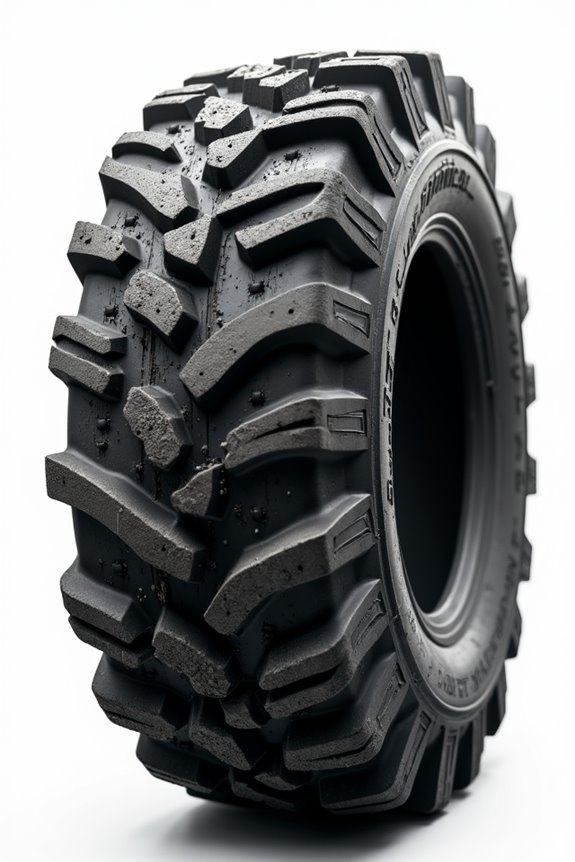
All-terrain tires are the best friends of adventurous drivers, offering a versatile solution for those of us who navigate both paved roads and rugged trails. With their deep, aggressive tread patterns and reinforced sidewalls, they confidently tackle gravel roads and muddy paths alike.
They’re built for comfort on highways, yet tough enough for off-road escapades. These tires carry the Three-Peak Mountain Snowflake symbol, so winter drives can be less intimidating—if we remember our tire maintenance tips! Regular checks are essential to guarantee peak performance across all terrains. Additionally, certain all-terrain tires may feature 3D sipe technology to enhance grip in snowy conditions.
Mud-Terrain Tires

Mud-terrain tires are like a secret weapon for off-road enthusiasts, engineered specifically to conquer the most challenging terrains we can throw at them. These tires boast large, deep tread blocks that provide exceptional off-road capabilities, ensuring that we can tackle muddy trails and rocky paths with confidence. Their open shoulder design prevents mud build-up, while self-cleaning patterns help maintain traction.
When it comes to terrain compatibility, these tires shine in swampy and sandy environments, making them perfect for adventure seekers. Just keep in mind, they aren’t the best on paved roads—noise and comfort take a hit. Additionally, inflation speed efficiency can be crucial when maintaining these tires for optimal performance in rugged conditions.
Takeaway: For those ready to explore the great outdoors, mud-terrain tires offer rugged durability and unmatched traction in tough conditions.
Performance Tires
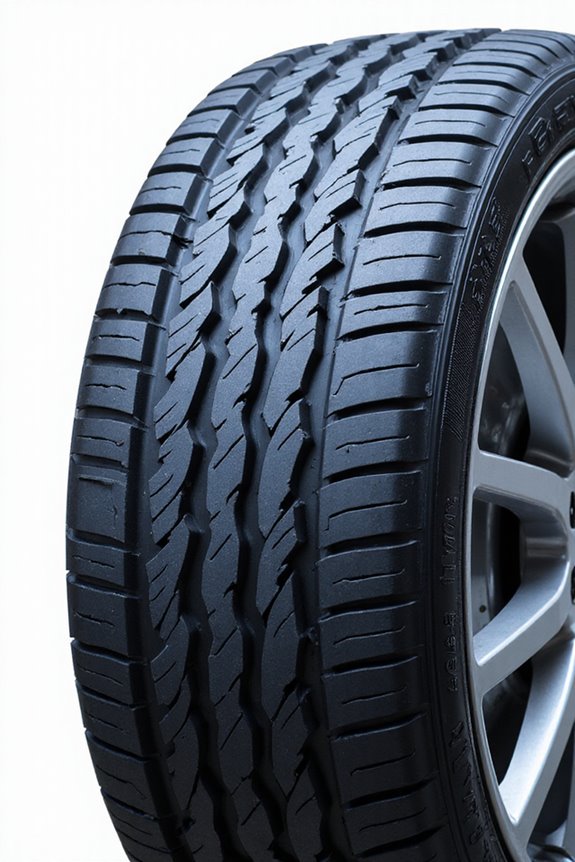
For those of us who love the thrill of driving, performance tires can truly elevate our experience on the road. With their unique performance characteristics, these tires utilize softer rubber compounds that enhance grip, especially on dry surfaces. Their stiffer sidewalls provide uncompromised handling during those exhilarating high-speed turns.
Equipped with impressive speed ratings—like the ZR rating for speeds exceeding 149 mph—these tires are perfect for sports cars. However, we might sacrifice tread life for that bulletproof responsiveness, with quicker wear and increased road noise. While they’re not our best choice for snowy conditions, come rain or shine, performance tires offer the precision and excitement we drivers crave. Most tire irons are designed to accommodate various tire types, ensuring you’re prepared for a quick change if needed.
Takeaway: Prioritize performance over durability with these specialized tires!
Winter / Snow Tires
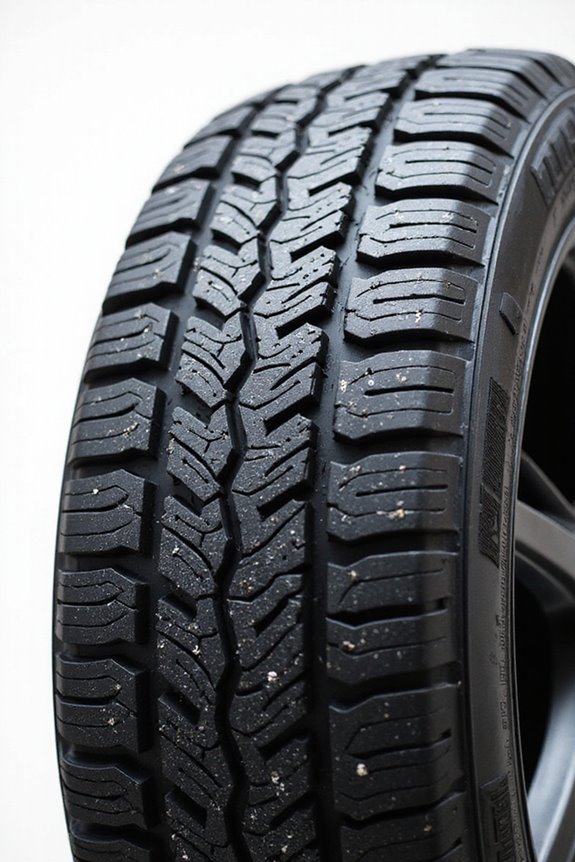
When winter’s icy grip takes hold, having the right tires can mean the difference between a smooth drive and a white-knuckle experience. Winter tires are crafted from a special rubber that stays flexible in the cold, ensuring better grip on slippery surfaces. Their tread design effectiveness shines through with deep grooves and sipes that dig into snow and ice, providing superior traction and shorter braking distances compared to all-season tires.
Takeaway:
- Winter Tire Performance: Essential for safety during winter.
- Tread Design: Deep grooves and sipes optimize grip and handling.
Additionally, choosing winter tires that are EPA compliant ensures that your vehicle remains within legal emissions standards while enhancing performance.
Whether you choose studded or true winter tires, remember that safety and control in winter conditions are paramount. Let’s keep smooth sailing through the snow!
Specialty Tires
Specialty tires are a fascinating category of tire technology designed to meet specific driving needs and conditions, providing us with a safer and more efficient driving experience. Among these, self-sealing tires come to our rescue by automatically sealing punctures as they happen, saving us the hassle of immediate replacements. Nanotechnology tires use advanced materials, improving durability and traction, which means we stay safe even in wet conditions.
For those of us driving electric or hybrid vehicles, EV tires play a significant role. Engineered to support the unique demands of electric motors, they enhance efficiency and grip, letting us enjoy the drive even more. Additionally, the principles of quality and durability in auto parts are crucial when selecting tires that ensure long-term vehicle performance.
Takeaway: Specialty tires are designed for safety, durability, and performance—tailored to our specific driving needs!
Touring Tires
Touring tires, as we might know them, are the unsung heroes of the tire world, blending comfort and performance to make our driving experience smoother and more enjoyable. Engineered for everything from daily commutes to long-distance travels, these tires feature advanced tread designs that enhance traction on wet and dry roads. What’s even better, their comfort features markedly reduce road noise and absorb those pesky vibrations, turning our rides into a peaceful escape.
While they provide reliable handling, keep in mind that we might sacrifice a bit of maximum grip compared to sportier tires. Still, with longer tread life and fuel efficiency, touring tires are made for the long haul—exactly what we need for our everyday adventures!
Run-Flat Tires
Run-flat tires are a game changer for those of us who value convenience and safety on the road. These innovative tires let us keep driving for up to 50 miles without air, giving us that crucial peace of mind in emergencies. The run flat benefits include avoiding roadside tire changes and reaching safety after a puncture, but there are run flat limitations too. They tend to feel firmer, and repairs can be trickier due to potential sidewall damage. Plus, they need a Tire Pressure Monitoring System to keep us informed. Ultimately, while they’re a fantastic safety feature, they might not be for everyone—so it’s worth considering our needs and comfort when choosing tires.
Frequently Asked Questions
How Do I Choose the Right Tire for My Vehicle?
When choosing the right tire for our vehicle, let’s consider tire selection tips: match tire type with vehicle compatibility, think about our driving habits, and be mindful of weather conditions to guarantee peak performance and safety.
When Should I Replace My Tires?
We should replace our tires when tread wear is low, especially during seasonal changes. Regular checks for damage and age, along with using tread gauges, help guarantee our safety on the road. Let’s stay proactive!
What Is the Importance of Tire Pressure?
We can’t underestimate tire pressure’s vital role in tire safety. Properly inflated tires guarantee better handling, fuel efficiency, and comfort, keeping us safe on the road while extending our tires’ lifespan. Let’s check regularly!
Can I Mix Different Types of Tires on My Vehicle?
We shouldn’t mix different types of tires on our vehicle. Tire compatibility is essential, and mixing brands can lead to instability. Let’s guarantee our ride stays safe and smooth by sticking to the same type.
How Do I Maintain My Tires for Longevity?
To maintain our tires for longevity, let’s rotate them regularly to promote even tread wear. Keeping an eye on pressure and practicing gentle driving habits will also help keep our tires in great shape longer.